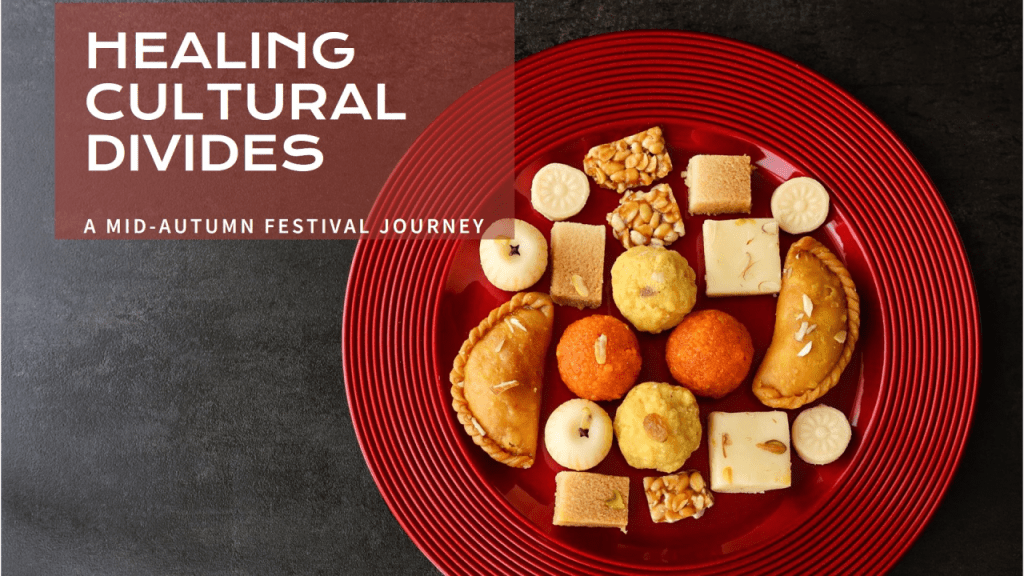
A Mid-Autumn Festival Journey
Earlier this week, we had homemade mooncakes on the dinner table to celebrate the Chinese Middle Autumn Festival. Yet, to my husband, they were just a sweet treat.
For anyone who doesn’t celebrate this holiday, mooncakes are not attached to a child’s fantasy after hearing the story about Chang’e flying to the moon, where a bunny lives, or abundant memories shared with extended families from all the Mid-Autumn Festivals they celebrated, and the sense of a calling to preserve Chinese culture with the next generation. However, there are many similarities that all cultures share. We all long for reunions with our loved ones, respect tradition, and enjoy festival feasts.
As I’m living abroad now and married to someone who doesn’t share my cultural background, I have struggled to bring Chinese traditions to our family. For a decade, I have felt resentful that my two favorite Chinese holidays, the Middle Autumn Festival and Chinese New Year, get downplayed in our house. I blamed my husband for not saying “Happy Middle Autumn Festival” at the dinner table or not knowing which day was the holiday. I even got mad at his lack of understanding of why I love this holiday so much and why he couldn’t Google what this Middle Autumn Festival is all about.
This is a common mistake people make when dealing with cross-cultural challenges; we tend to expect the other party to behave as if he or she has grown up in that culture. It’s like offering a piece of Easter egg candy to an adult and expecting this person to get the same reaction as someone who has been celebrating Easter since a kid. Bridging the cultural gap starts with sharing and celebrating, not judging. Realizing this, I have committed myself to take the initiative to share my culture. I know that there is common ground that can be established between myself and the Western culture I live in.
Bridge the Cultural Gap with Common Language
Originating in China, the Mid-Autumn Festival is actually celebrated in many Asian countries. In Korea, it’s called Chuseok. In Vietnam, it’s called Tết Trung Thu (or Children’s Day). In Japan, it’s called Tsukimi. Although these countries have different versions of the festival with their own traditions and legends, the cultural common ground makes it easier for Asian people to relate to one another on this day. However, the gap is bigger when Western people are asked to relate to this festival. It’s hard for my American husband to grasp the meaning behind this festival and the nuances behind our traditions. His reaction has always been: What exactly do you do on this holiday? What’s so special about looking at the moon and eating mooncakes? So, I have decided to show him concepts he can relate to.
The way we celebrate Mid-Autumn in China is quite simple yet profound. On this day, there is seasonal food and flowers to enjoy, people you love to gather around, and a full moon to worship. Eating mooncakes, worshiping the moon, and enjoying sweet osmanthus are our top three traditions. Sweet osmanthus is a fragrant yellow flower that blooms in autumn and marks the change of season in China. Some cultures may enjoy the fragrance of seasonal flowers while others enjoy the piney smell of evergreen, but all these holidays mark the change of season and focus on what really matters. You will notice seasonal delights made of sweet osmanthus or pumpkin, depending on where you travel, but no matter where you live, there is always some nostalgic treat that makes you feel like a kid again.
If you work in China, expect to have a long weekend holiday and receive diverse flavored mooncakes gifted from friends, relatives, and especially employers. You will also see enchanting lanterns illuminate the streets. In the US, Christmas lights illuminate everywhere you go, telling you the holiday season is here. This decorative beauty is something that our cultures share. All cultures cherish these days that bring families together, each in our own way. The Chinese Middle Autumn Festival is very much like Thanksgiving. The common ground we share is more fundamental than our differences.
Take the Leap: Cultural Adaptation & Preservation
Now living overseas and raising a young family, the Mid-Autumn Festival means even more than ever to me. It’s a special day that reminds me of childhood memories and triggers homesickness. I still remember vividly the year when our family moved to a new apartment with a 1000sqt patio. My dad designed that patio, built a bridge, a gazebo, a rockery, and a canal landscape, and planted roses and grass. We spent the Middle Autumn festival with grandparents, uncles, aunts, and cousins, enjoying mooncakes and snacks, while I listened to Avirl Lavigne’s 1st album “Let Go” under the moonlight. Ultimately, this holiday ties to my cultural roots and reminds me of the richness of Chinese culture I want to cherish and share with my children. Just like the tradition of decorating holiday lights, hanging ornaments on Christmas trees, and preparing Thanksgiving dinner have become essential parts of our year in the US.
Preserving one’s culture outside the cultural norm we live in takes courage and creativity. For years, I was hoping the other party would magically understand my culture instead of myself taking ownership and showing it. I had excuses; “We have no sweet osmanthus tree here, so we can’t enjoy this festival’s seasonal fragrance.” “Our kids need to go to bed early so we can’t worship the moon.” Although the ways of celebrating the Mid-Autumn Festival in our international family are not exactly the same in China, I hope the sense of family and warmth continues to be passed down and preserved through these traditions in our international family.
In cross-cultural communication, we should take the initiative to adapt to the cultural norm we’re living in and start sharing to find common ground instead of waiting for the other party to adapt to our cultural norm and end up frustrated. It’s tempting to lose contact with one’s original culture in this process. Therefore, being creative and creating your fusion matters a lot while we strive to keep the core of one’s original cultural values.
The full moon’s luminous glow is believed to symbolize unity and togetherness, a sentiment that resonates deeply with Chinese culture. Since ancient times, many poets have entrusted the longing for home and feelings of sorrow to the moon. For thousands of years, Chinese people value togetherness, sharing and harmony as we find comfort in the belief that “We all touch the same blue sky and touch on the same earth”. I believe it speaks to many other cultures as well when people are going through separation, isolation, and hardships.
I will end this blog with one of my favorite poems by Su Shi: “May we all be blessed with longevity. Though far apart, we are still able to share the beauty of the moon together.”
 Teak & Tale
Leave a comment